

Inner life
How jumping into the ocean can wake you up

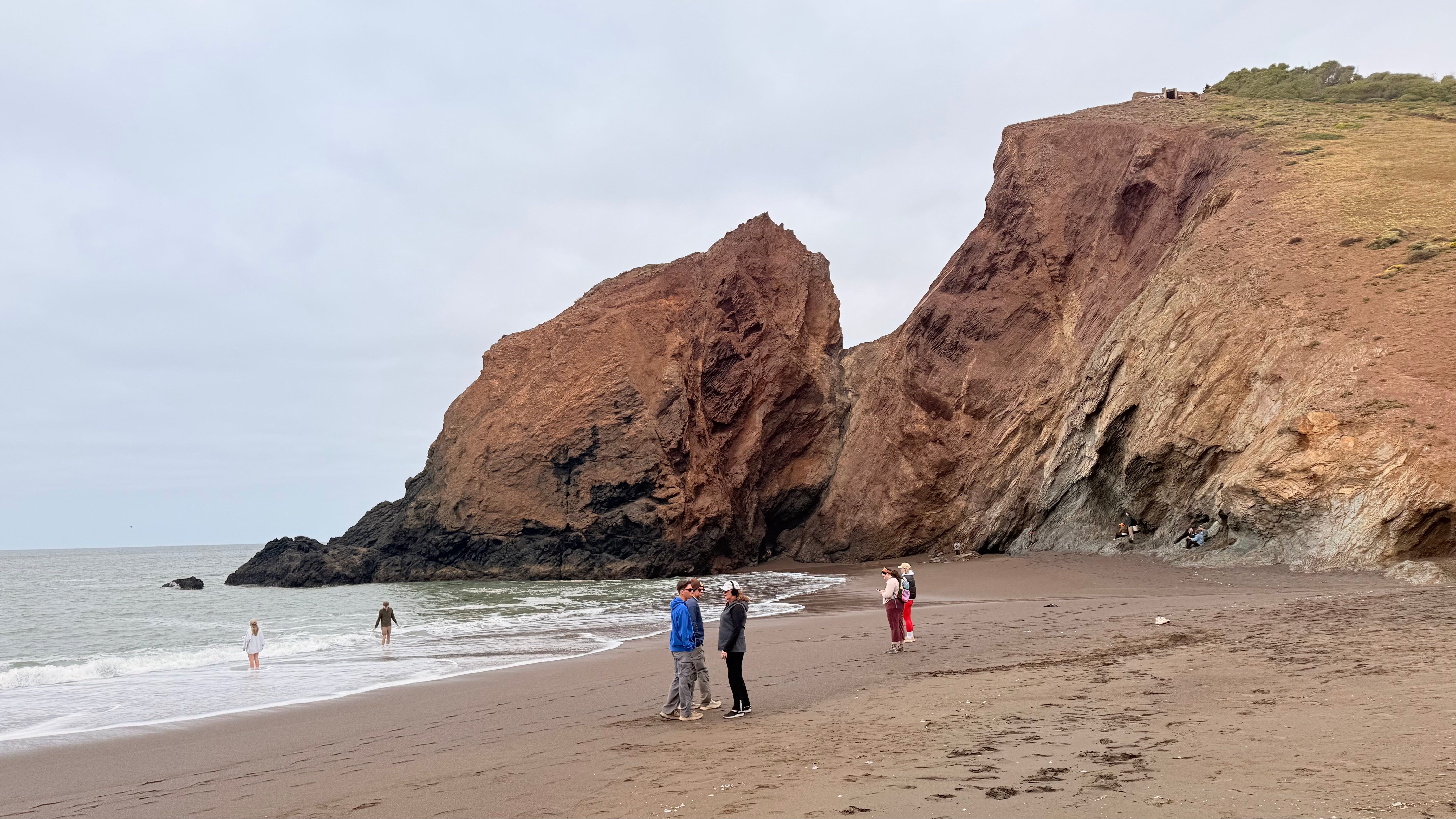
At Tennessee Beach, on the Marin headlands just north of the Golden Gate, jagged fins of soft, striated rock curve down on either side of a verdant valley mouth flecked with yellow and purple wildflowers, opening onto a coarse, dark, sandy beach. The rock walls appear vividly reddish from a distance, but resolve into a whole range of reds, oranges, yellows, and even pale greens up close. The beach slopes steeply down to the slate-hued ocean. Waves appear and immediately crash against the shelving bottom, then draw the water back to sea with a powerful subsurface suction.
I jumped into the sea here, with a few friends, on Monday. We swam straight out into the ocean, then turned right, past more rocks -- black and streaming with foam from the ceaseless pounding of the waves -- until we could see another beach, and past that, a jagged and primeval natural bridge bending down into the water. Through the arch, we glimpsed another cove, seeming as inviting and unreachable as Paradise.
Swimming in these parts comes with a sense of connection, but also fear. You don’t know what could be in that water. Under the surface, you can’t see much beyond your own hands other than the green of the sea. The rocks command respect; the open ocean, awe. You can enjoy swimming here, if you know what you’re doing, but you don’t fuck around, or you might find yourself swept out to sea, or perhaps tossed against a barnacle-covered boulder. Or maybe pounded against the rock, and then swept out to sea -- and what’s left of you eaten by a shark.
Or not! We had a lovely swim, enjoyed the frisson of fear and the uplift of wild beauty, and then we swam back, elated and refreshed. Maybe even a little transformed. We spent an hour on the beach soaking up what little solar radiation came to us through the overcast, sharing our snacks, and talking.
Swimming, for me, is where I find myself, my friends, and my purpose. It renews me and reconnects me with the universe.
I got a chance to talk about that on the air this week, with my old friend Megan McFeely’s radio show, Inner Life.
In this half-hour conversation, recorded a couple of weeks ago, she asked me to share how swimming led me to discover a deeper, more inward part of myself, and what I understand “inner life” to be.
I was delighted by the invitation and enjoyed the conversation very much, but I find that I’m a little nervous about sharing it with you now.
In the family I grew up in, talking about your feelings was a bit like discussing your genitalia or your poop. Everybody has these things, that was understood, but after the age of 5 or 6, it wasn’t really appropriate to talk about them much.
My father was a psychologist, but he wasn’t the kind who talked a lot about feelings; he spent his career researching how scientists think and make decisions. Spirituality was actively discouraged, and we had no religious traditions. We were atheists, really, but with the intellectual humility to call ourselves agnostics.
When I started experiencing the universe in a more mystical way, as a teenager and young adult, I had no place to put these experiences, no vocabulary with which to understand them. I threw myself into art and poetry, seeking a channel for the kind of transcendence I longed for. Later, I threw myself into journalism and technology, seeking a way to put bread on the table, and the transcendent part of life receded.
Much later, I found swimming, which woke me up to the fact of my body and my breath, which re-opened the door to the mystical. Through that, I found my way to a meditation practice. Eventually, I found a meaningful path for understanding my inner life and a guide for living ethically, via the Buddhist teachings, or the version of them that has come to us through through China and Vietnam, then carried into the West by Thích Nhất Hạnh. It’s a humanistic kind of mysticism, one that prioritizes connection with others and a recognition of how our individual existence is deeply interconnected with everyone else’s, and indeed with everything in the universe. Thích Nhất Hạnh calls this interbeing.
That slowly developing insight, which started with swimming, has had an effect on my writing, which Megan kindly asked me about. It has made me more aware of writing’s role connecting us to one another, even in my professional work. Even if you’re writing about enterprise software, there is a human, somewhere, making a decision — and that’s who you want to inspire, persuade, or connect to.
So here I am, awkwardly sharing this conversation about my inner life in hopes that it might connect with you.
If you want to hear how swimming led me to meditation, which hopefully made me a somewhat better father and writer, check out Inner Life on KMUN in Astoria, Oregon. Mine is the May 25 episode.
You can also listen to it on Spotify or iTunes.
Field notes
Haiku workshop: Earlier this month I hosted a haiku party in San Francisco. We combined fragments and phrases scribbled on index cards to create mix-and-match haiku, and then added two more lines to create mix-and-match tanka (five-line poems). It was a fun, creative, and interactive evening!
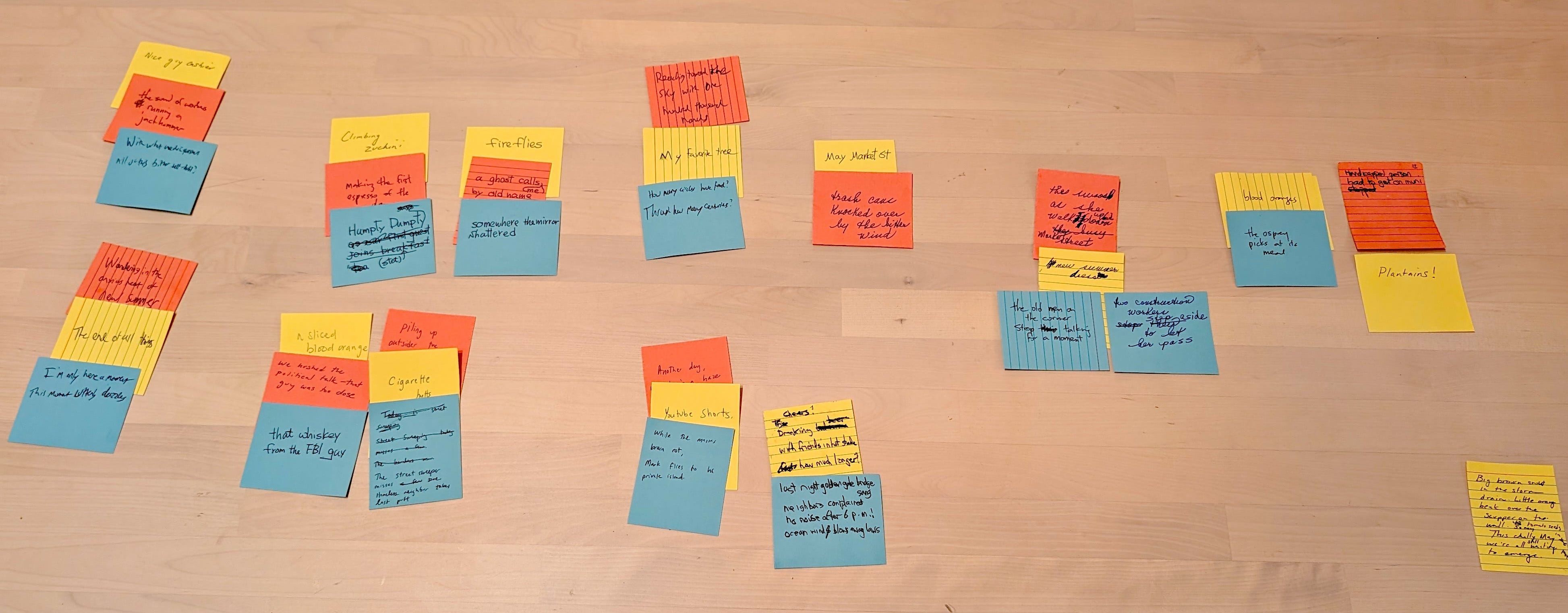
One of my favorites:
 the swoosh
 as she walks up and down Market street
 new summer dress

 the old men on the corner
 stop talking for a moment
Writing prompt: In the Wednesday Writers circle I facilitate, I share a meditation or a writing prompt every week to kick off our hour of companionable silence. Recently, I’ve been sharing prompts from Suleika Jaouad’s Book of Alchemy, and they are bangers. All of the prompts are preceded by short essays by various authors. This one comes from Esther Perel:
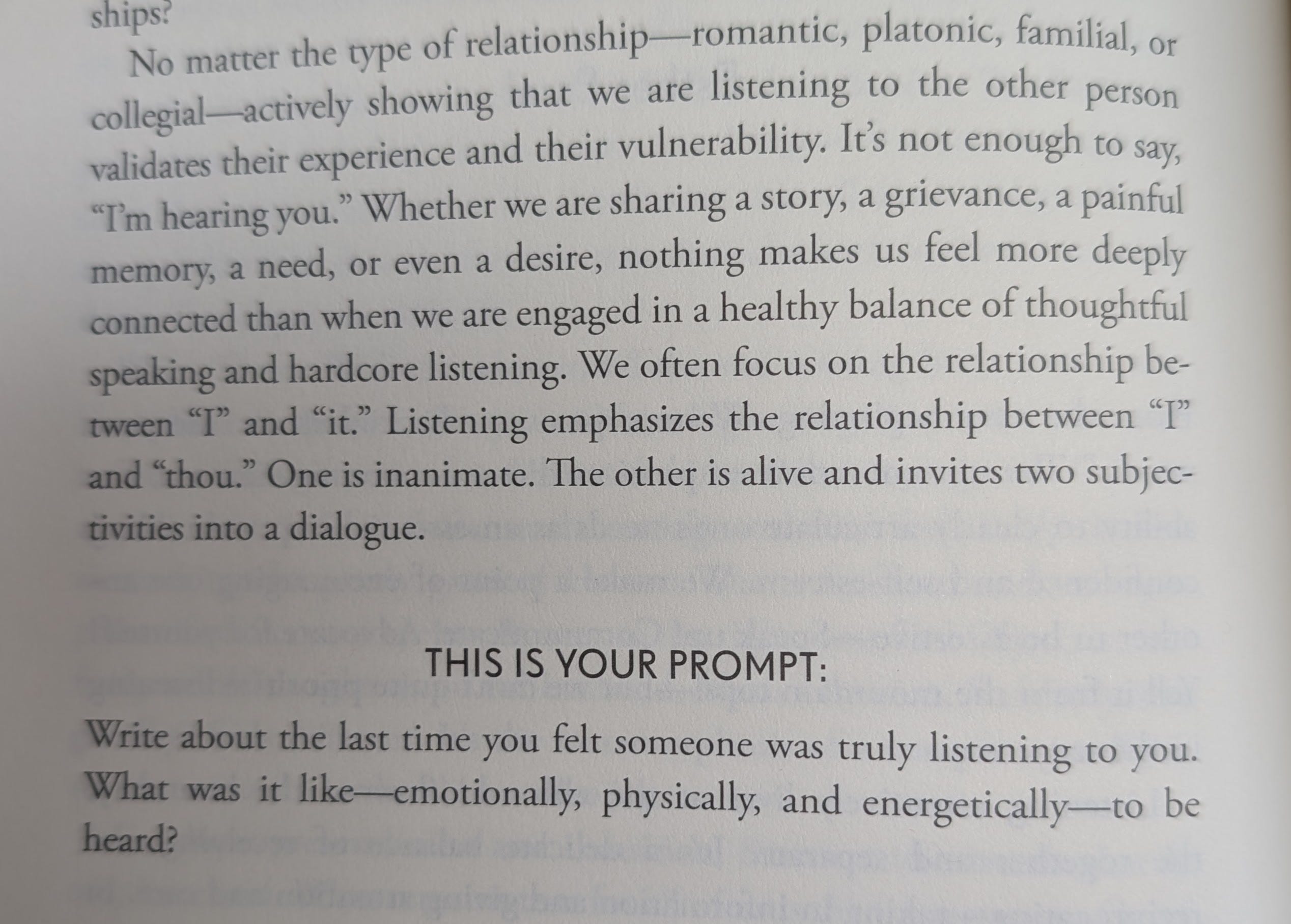
What was the last time you felt someone was truly listening to you? What was it like to be heard?
Until next time,
~Dylan~
"We were atheists, really, but with the intellectual humility to call ourselves agnostics." This made me LOL.
So good, Dylan. Thanks for writing!
I love your writing. It is like a fluid, perhaps like the feeling you get from swimming in the open water.