


Listen to the podcast version of this issue.
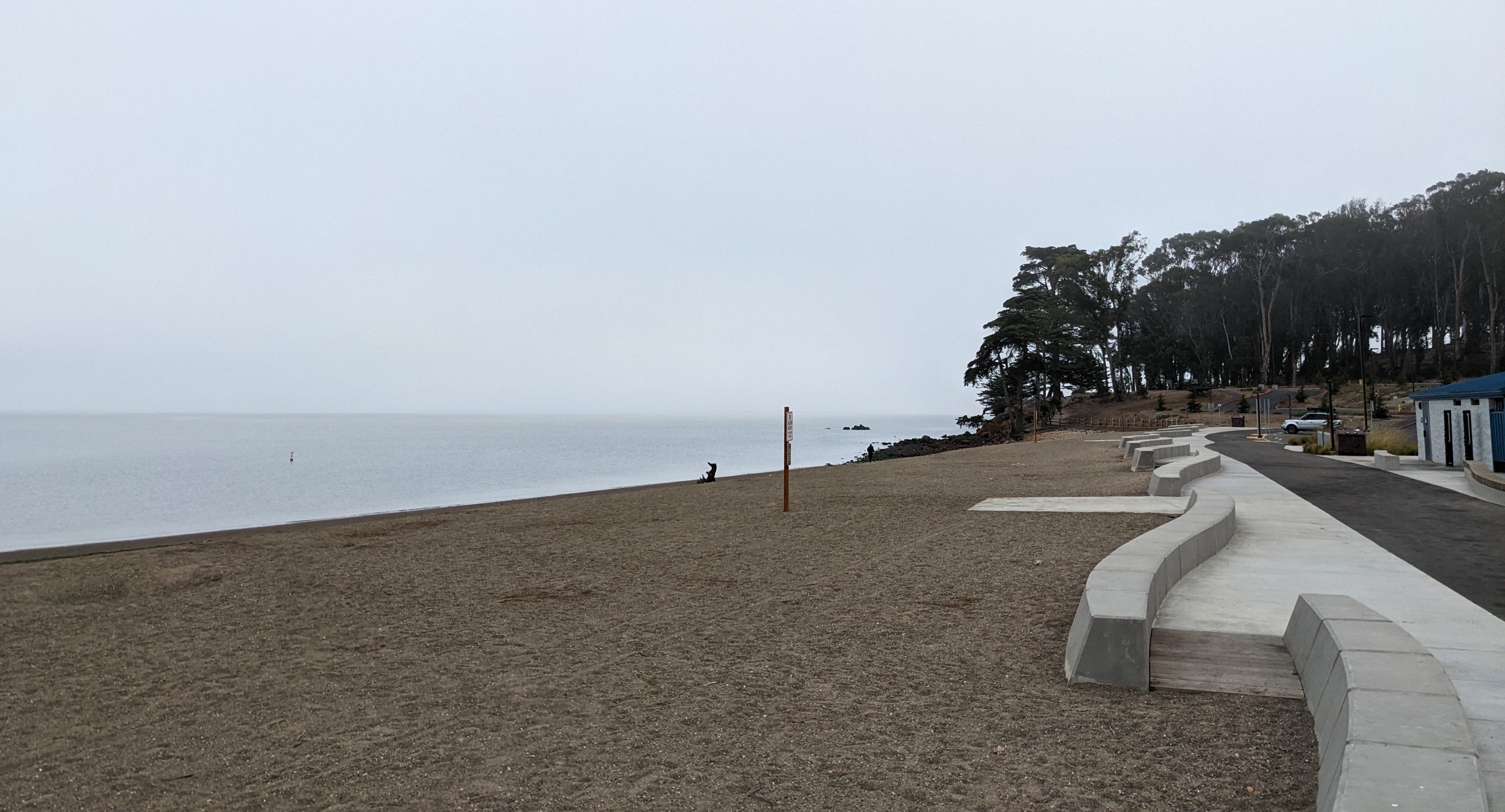
I’m standing on the edge of the San Francisco Bay in San Mateo, my bare toes gripping the blocky concrete ramp installed a few years ago to help windsurfers get in and out of the water. Before me, the greenish water of the Bay is slightly ruffled by a gentle wind, and in the distance, the city of San Francisco twinkles in the morning haze.
To my left, just half a mile away, is the north-south corridor of the 101, an endless vein of commuter traffic connecting San Francisco with Silicon Valley. Next to it, the bright horizontal lines of Meta's new Burlingame campus shine out, a clean, expensive-looking set of buildings on the waterfront, where engineers are creating a world of virtual reality, accessible only to those willing to strap on a headset and trade the real world for one made of polygons.
To my right is real reality: San Mateo’s “wild coast,” a low bluff of sandstone topped with eucalyptus. At the foot of the bluff, the water I will be swimming in laps against the rocks. Shorebirds mill about in the water: Coots, scoters, and buffleheads, their patterns of black and white seeming to sparkle as they paddle, dive, and resurface. Somewhere behind me, crows caw at each other in the parking lot.
It’s March, and a chilly wind blowing across my shoulders reminds me not to stand there too long. I walk a few steps into the water, until it’s up to my knees, and then bend down, swirling my hands around in it and splashing some on my face. The water’s about 52 degrees Fahrenheit, or about 11 degrees Celsius — chilly enough to provide a shock to the system when you first get in.
My swim watch tells me that my heart rate is 82 beats per minute, reflecting my excitement and the reaction to the cold water. The watch also lets me know that it has acquired a GPS signal and is prepared for me to start my swim. Its screen says, simply: Ready.
I take a few deep breaths, and dive in.
…
Read the rest of this post: